The Lucky Country — The discovery that changed everything
On Christmas Eve 1969 the Norwegian authorities confirm Phillips Petroleum's Ekofisk strike, made on the program's last well, as a commercial discovery. The half-century since has built the world's largest sovereign wealth fund — and the bet on what comes after petroleum.
By the autumn of 1969 the management of Phillips Petroleum Company 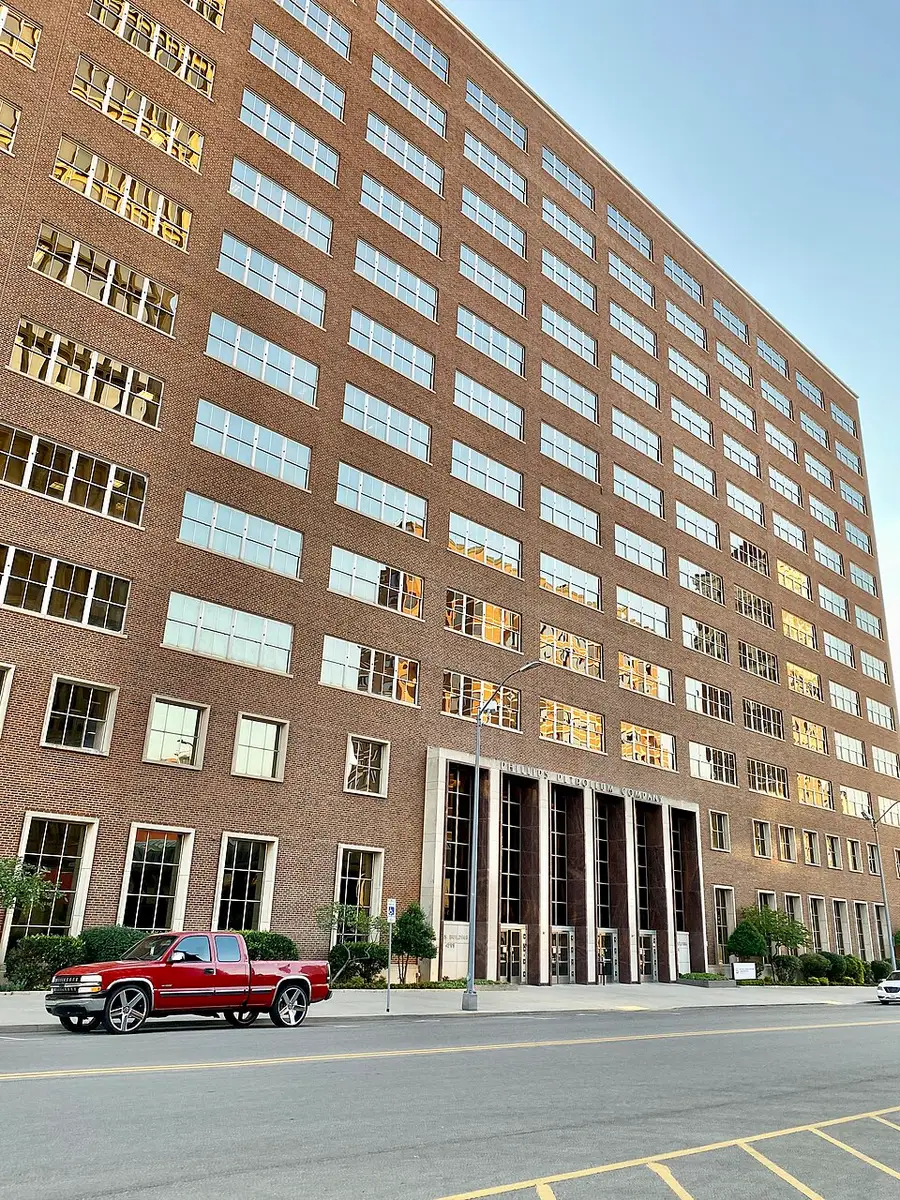 Warren LeMay, Phillips Petroleum Company Adams Building, Bartlesville, OK (2023), CC BY-SA 2.0, Wikimedia Commons The company's longtime headquarters at Bartlesville, Oklahoma — the home office that was losing patience with the Norwegian search in the autumn of 1969, weeks before the last obligated well struck the Ekofisk field. American petroleum company founded 1917 by Frank and L. E.
Phillips at Bartlesville, Oklahoma. Headquartered at
Bartlesville through the twentieth century. Acquired the
Norwegian continental-shelf license that produced the
Ekofisk discovery on 25 October 1969 — drilled on the final
obligated well of an exploration programme the company had
been preparing to terminate. The Ekofisk find made Phillips
the first commercial operator on the Norwegian shelf and
the joint-venture operator of the field through its
development. Merged with Conoco Inc. in 2002 to form
ConocoPhillips, which continues to operate Ekofisk today.
The single most consequential foreign company in the
history of the Norwegian petroleum economy.
in Bartlesville, Oklahoma is preparing to terminate its Norwegian North Sea
Warren LeMay, Phillips Petroleum Company Adams Building, Bartlesville, OK (2023), CC BY-SA 2.0, Wikimedia Commons The company's longtime headquarters at Bartlesville, Oklahoma — the home office that was losing patience with the Norwegian search in the autumn of 1969, weeks before the last obligated well struck the Ekofisk field. American petroleum company founded 1917 by Frank and L. E.
Phillips at Bartlesville, Oklahoma. Headquartered at
Bartlesville through the twentieth century. Acquired the
Norwegian continental-shelf license that produced the
Ekofisk discovery on 25 October 1969 — drilled on the final
obligated well of an exploration programme the company had
been preparing to terminate. The Ekofisk find made Phillips
the first commercial operator on the Norwegian shelf and
the joint-venture operator of the field through its
development. Merged with Conoco Inc. in 2002 to form
ConocoPhillips, which continues to operate Ekofisk today.
The single most consequential foreign company in the
history of the Norwegian petroleum economy.
in Bartlesville, Oklahoma is preparing to terminate its Norwegian North Sea 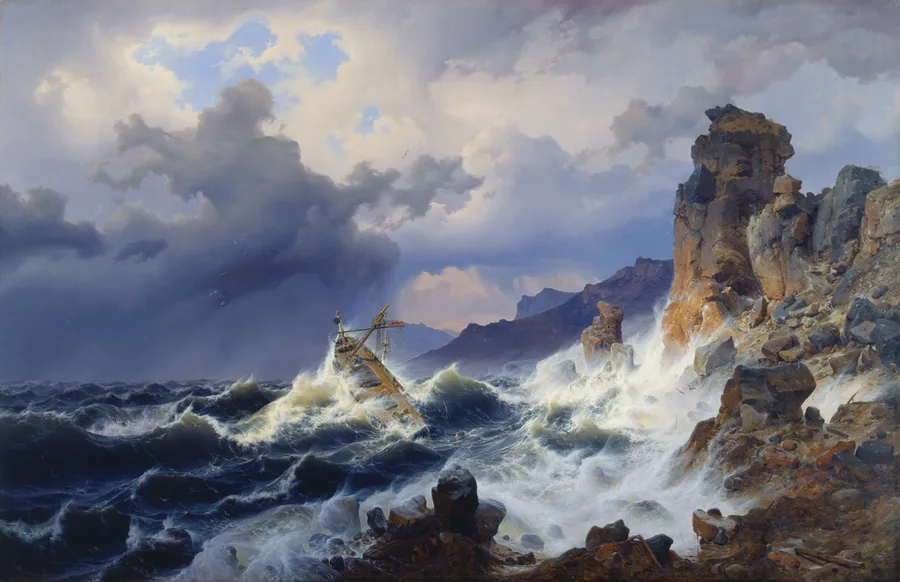 Andreas Achenbach, Ein Seesturm an der norwegischen Küste (1837), Städel Museum Achenbach painted the North Sea in its old character — a dangerous crossing that wrecked ships against the Norwegian coast. A century later the same waters turned out to hold the Ekofisk find and the petroleum wealth of the Norwegian shelf. Marginal sea of the northeastern Atlantic Ocean, bounded by
Britain to the west, Norway to the east, Denmark and Germany
to the southeast, the Netherlands and Belgium to the south,
and France's Channel coast to the southwest. Average depth
about ninety metres; substantially deeper in the Norwegian
Trench off the Norwegian coast. Site of one of the world's
largest concentrations of offshore petroleum: the Groningen
Field discovery of 1959 on Dutch territory opened the basin;
the Ekofisk discovery on Norway's continental shelf in late
1969 confirmed that the basin held commercial-scale oil; the
British Forties Field followed in 1970. The Norwegian
continental shelf today carries most of Norway's petroleum
production and the activity that supports the Government
Pension Fund Global.
exploration program. The company has drilled most of its way through the obligated wells under its 1965 Norwegian continental-shelf license. No commercial discovery has yet been made: an earlier well in block 2/4 had taken a gas kick in 1968 and been plugged, and the nearby Cod field announcement in June 1968 had produced only sub-commercial gas and condensate. The company has lost tens of millions of dollars in 1969 dollars on the operation. The exploration manager has recommended that the final well, designated 2/4-2 on a block about three hundred and twenty kilometers (two hundred miles) southwest of Stavanger
Andreas Achenbach, Ein Seesturm an der norwegischen Küste (1837), Städel Museum Achenbach painted the North Sea in its old character — a dangerous crossing that wrecked ships against the Norwegian coast. A century later the same waters turned out to hold the Ekofisk find and the petroleum wealth of the Norwegian shelf. Marginal sea of the northeastern Atlantic Ocean, bounded by
Britain to the west, Norway to the east, Denmark and Germany
to the southeast, the Netherlands and Belgium to the south,
and France's Channel coast to the southwest. Average depth
about ninety metres; substantially deeper in the Norwegian
Trench off the Norwegian coast. Site of one of the world's
largest concentrations of offshore petroleum: the Groningen
Field discovery of 1959 on Dutch territory opened the basin;
the Ekofisk discovery on Norway's continental shelf in late
1969 confirmed that the basin held commercial-scale oil; the
British Forties Field followed in 1970. The Norwegian
continental shelf today carries most of Norway's petroleum
production and the activity that supports the Government
Pension Fund Global.
exploration program. The company has drilled most of its way through the obligated wells under its 1965 Norwegian continental-shelf license. No commercial discovery has yet been made: an earlier well in block 2/4 had taken a gas kick in 1968 and been plugged, and the nearby Cod field announcement in June 1968 had produced only sub-commercial gas and condensate. The company has lost tens of millions of dollars in 1969 dollars on the operation. The exploration manager has recommended that the final well, designated 2/4-2 on a block about three hundred and twenty kilometers (two hundred miles) southwest of Stavanger 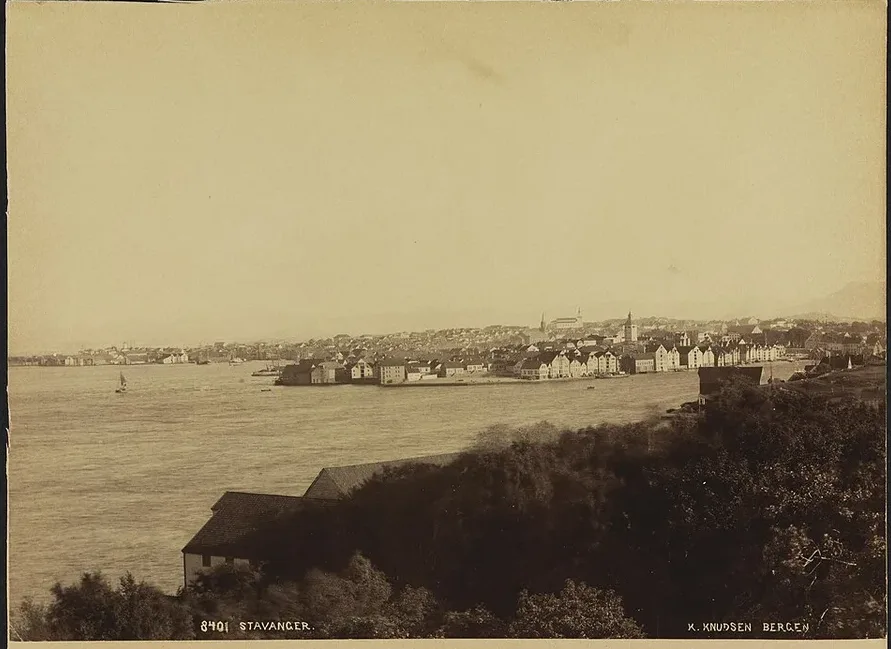 Knud Knudsen, Stavanger (1888-1894), National Library of Norway Stavanger in the late 1880s, a low wooden town around its harbour — the same city that a century later became the capital of Norway's oil economy, seen here decades before the first offshore rig. City on the southwestern Norwegian coast in Rogaland; modern
Norway's fourth-largest city and the operational capital of the
Norwegian petroleum economy since the 1970s. The traditional site
of the sea-battle of Hafrsfjord that completed Harald Fairhair's
consolidation lies at the city's southwestern edge, marked by the
Sverd i fjell monument. The Norwegian Petroleum Directorate, the
safety regulator (Havtil), and Equinor (formerly Statoil) are all
headquartered in or around the city. Population around one hundred
and forty thousand in the municipality; metropolitan area roughly
twice that.
Stavanger Also discussed in Before There Was Norway — petty kingdoms at the edge of the worldThe Viking Age — longships, legends, and the first "Norway"A Catholic Norway — the faith that gave the kingdom its first institutions and the stave churchesThe 400-Year Night — when the Northern Lion lay dormant800,000 Norwegians Leave — the century that built a Second NorwayWorld War II — the King’s “No” and the Nazis in Norway in seventy meters of water, should be abandoned rather than completed, because the company is convinced that the Norwegian North Sea contains no commercial petroleum. The geologist on the rig, however, has reported gas signatures during the previous days’ drilling that he wants to test before the operation closes. The well is allowed to continue, partly because the contractual obligation to drill it makes the cost of abandonment the same as the cost of completion. The drillers reach the producing zone on the morning of the twenty-fifth of October 1969 at a depth of about three thousand meters. The Ocean Viking rig flares the test stream; the well is producing oil. Phillips informs the Norwegian government formally on the twenty-third of December 1969. On Christmas Eve the Norwegian authorities confirm the find as commercial. The Ekofisk
Knud Knudsen, Stavanger (1888-1894), National Library of Norway Stavanger in the late 1880s, a low wooden town around its harbour — the same city that a century later became the capital of Norway's oil economy, seen here decades before the first offshore rig. City on the southwestern Norwegian coast in Rogaland; modern
Norway's fourth-largest city and the operational capital of the
Norwegian petroleum economy since the 1970s. The traditional site
of the sea-battle of Hafrsfjord that completed Harald Fairhair's
consolidation lies at the city's southwestern edge, marked by the
Sverd i fjell monument. The Norwegian Petroleum Directorate, the
safety regulator (Havtil), and Equinor (formerly Statoil) are all
headquartered in or around the city. Population around one hundred
and forty thousand in the municipality; metropolitan area roughly
twice that.
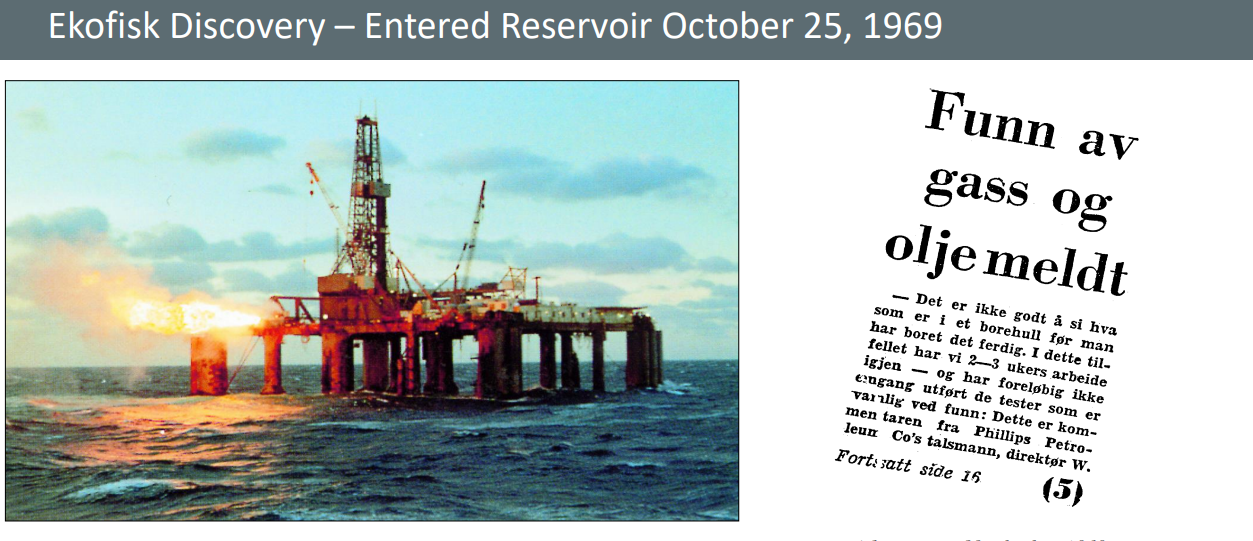
Stavanger Also discussed in Before There Was Norway — petty kingdoms at the edge of the worldThe Viking Age — longships, legends, and the first "Norway"A Catholic Norway — the faith that gave the kingdom its first institutions and the stave churchesThe 400-Year Night — when the Northern Lion lay dormant800,000 Norwegians Leave — the century that built a Second NorwayWorld War II — the King’s “No” and the Nazis in Norway in seventy meters of water, should be abandoned rather than completed, because the company is convinced that the Norwegian North Sea contains no commercial petroleum. The geologist on the rig, however, has reported gas signatures during the previous days’ drilling that he wants to test before the operation closes. The well is allowed to continue, partly because the contractual obligation to drill it makes the cost of abandonment the same as the cost of completion. The drillers reach the producing zone on the morning of the twenty-fifth of October 1969 at a depth of about three thousand meters. The Ocean Viking rig flares the test stream; the well is producing oil. Phillips informs the Norwegian government formally on the twenty-third of December 1969. On Christmas Eve the Norwegian authorities confirm the find as commercial. The Ekofisk 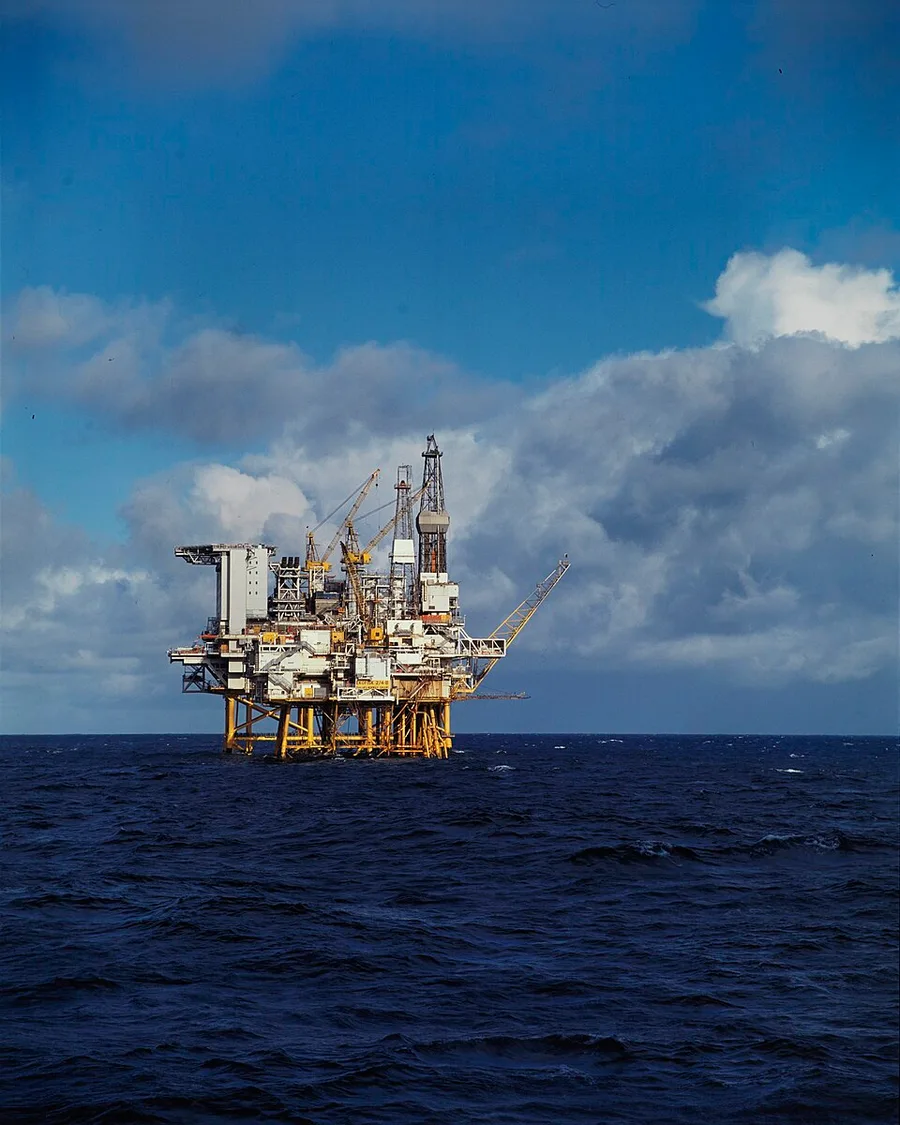 Knudsens Fotosenter / DEXTRA Photo, CC BY 4.0 A platform in the Ekofisk complex, the field the Ocean Viking discovered in 1969 and Phillips Petroleum brought into production, the foundation of the modern Norwegian petroleum economy. Offshore oil and gas field in the central North Sea, about
320 km (200 miles) southwest of Stavanger on the Norwegian
continental shelf, in approximately seventy metres of
water. Discovered on 25 October 1969 by Phillips
Petroleum's Ocean Viking rig on the final well of the
company's Norwegian exploration programme; confirmed as
commercial by the Norwegian authorities on Christmas Eve
1969. Ekofisk was the first major commercial oil discovery
on the Norwegian continental shelf and the foundation of
the modern Norwegian petroleum economy. The Alexander L.
Kielland flotel that capsized on 27 March 1980 was
stationed on the Ekofisk complex. The field remains in
production today under Phillips' successor ConocoPhillips
and is expected to operate into the 2050s.
will turn out to be the first major commercial oil discovery in the North Sea and the foundation of the modern Norwegian petroleum economy.
Knudsens Fotosenter / DEXTRA Photo, CC BY 4.0 A platform in the Ekofisk complex, the field the Ocean Viking discovered in 1969 and Phillips Petroleum brought into production, the foundation of the modern Norwegian petroleum economy. Offshore oil and gas field in the central North Sea, about
320 km (200 miles) southwest of Stavanger on the Norwegian
continental shelf, in approximately seventy metres of
water. Discovered on 25 October 1969 by Phillips
Petroleum's Ocean Viking rig on the final well of the
company's Norwegian exploration programme; confirmed as
commercial by the Norwegian authorities on Christmas Eve
1969. Ekofisk was the first major commercial oil discovery
on the Norwegian continental shelf and the foundation of
the modern Norwegian petroleum economy. The Alexander L.
Kielland flotel that capsized on 27 March 1980 was
stationed on the Ekofisk complex. The field remains in
production today under Phillips' successor ConocoPhillips
and is expected to operate into the 2050s.
will turn out to be the first major commercial oil discovery in the North Sea and the foundation of the modern Norwegian petroleum economy.
The Geological Survey said no
The Norwegian government had been preparing for this possibility for a decade. In February 1958 the Foreign Ministry asked the Geological Survey of Norway whether the Norwegian continental shelf might contain hydrocarbons. The Survey’s written reply was that “the chances of finding coal, oil or sulphur on the continental shelf off the Norwegian coast can be discounted.” The Foreign Ministry filed the reply, did not entirely accept it, and watched as the Groningen discovery in 1959 and the subsequent natural-gas finds unfolded across the southern North Sea over the next decade. By royal decree of the thirty-first of May 1963, Norway formally claimed sovereignty over its continental shelf; a Storting bill of the fourteenth of June established state ownership of the resources. In March 1965 the country settled its median-line boundary with the United Kingdom, and later that year, in December, with Denmark; on the thirteenth of April 1965 the first licensing round opened to the international oil companies. The first exploration drilling began in July 1966. By the time the find came in on the eve of 1970, the Norwegian government had the basic institutional framework already in place. What it now needed was a doctrine for how to manage what was about to arrive.
The hydropower template
Norway came to the oil question with sixty years of practice in public resource stewardship. The country’s first concession law, the Konsesjonsloven 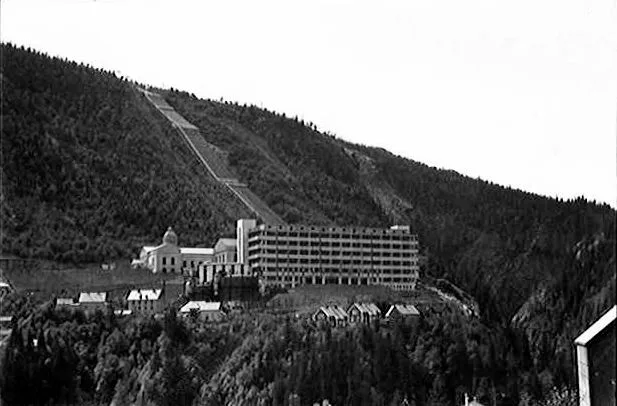 Anders Beer Wilse / Norsk Folkemuseum, public domain (PD-Norway50) Vemork is the landmark case of the licensing-and-reversion regime Konsesjonsloven created: a private hydropower concession built at this scale because the state had secured the right to take the whole facility back at the license's end. The Concession Law — the Norwegian statutory framework
establishing public ownership of hydropower resources and
the licensing regime for private development. First passed
in 1906; reorganised by the Industrial Concession Act of
1909 and the Watercourse Regulation Act of 1917.
Established that the country's hydropower belonged to the
Norwegian nation rather than to whoever owned the
surrounding land. Private developers could acquire
licenses for 60–80 years; the facility then reverted to
the state without compensation under hjemfall. By the
late 1960s Norway had electrified itself almost entirely
under this regime. The institutional template the Ten Oil
Commandments translated to petroleum.
, had passed in 1906; the Industrial Concession Act of 1909 and the Watercourse Regulation Act of 1917 supplemented it, establishing the principle that the country’s hydropower resources — waterfalls, rivers, the electricity they could generate — belonged to the nation rather than to whoever happened to own the surrounding land. Private developers could acquire licenses to harness those resources for a defined period, typically sixty to eighty years, after which the entire facility — dam, generators, transmission lines, the lot — reverted to the state without compensation. The mechanism, called Hjemfall Falling home — the Norwegian legal principle, formalised
in the Industrial Concession Act of 1909 and the
Watercourse Regulation Act of 1917, by which a private
licensee granted the right to develop a Norwegian natural
resource (historically hydropower) for a defined period
(typically 60–80 years) returns the entire facility to the
Norwegian state without compensation at the end of the
license. Captures for the public treasury the rent the
resource itself produces, distinct from the rent that
human investment in turbines and pylons earns. The
doctrine made Norway one of the world's most electrified
hydropower economies by the late 1960s. When North Sea
oil arrived, Norway reached for hjemfall as the
institutional template.
(literally, “falling home”), captured for the public treasury the rent the resource itself produced, distinct from the rent that the human investment in turbines and pylons earned. By the late 1960s Norway had electrified itself almost entirely on hydropower under this regime. When oil came, Norway reached for a machine it had been building since the Edwardian period. The Ten Oil Commandments were less a doctrinal invention than a translation of an existing resource-stewardship logic from one substance to another.
Anders Beer Wilse / Norsk Folkemuseum, public domain (PD-Norway50) Vemork is the landmark case of the licensing-and-reversion regime Konsesjonsloven created: a private hydropower concession built at this scale because the state had secured the right to take the whole facility back at the license's end. The Concession Law — the Norwegian statutory framework
establishing public ownership of hydropower resources and
the licensing regime for private development. First passed
in 1906; reorganised by the Industrial Concession Act of
1909 and the Watercourse Regulation Act of 1917.
Established that the country's hydropower belonged to the
Norwegian nation rather than to whoever owned the
surrounding land. Private developers could acquire
licenses for 60–80 years; the facility then reverted to
the state without compensation under hjemfall. By the
late 1960s Norway had electrified itself almost entirely
under this regime. The institutional template the Ten Oil
Commandments translated to petroleum.
, had passed in 1906; the Industrial Concession Act of 1909 and the Watercourse Regulation Act of 1917 supplemented it, establishing the principle that the country’s hydropower resources — waterfalls, rivers, the electricity they could generate — belonged to the nation rather than to whoever happened to own the surrounding land. Private developers could acquire licenses to harness those resources for a defined period, typically sixty to eighty years, after which the entire facility — dam, generators, transmission lines, the lot — reverted to the state without compensation. The mechanism, called Hjemfall Falling home — the Norwegian legal principle, formalised
in the Industrial Concession Act of 1909 and the
Watercourse Regulation Act of 1917, by which a private
licensee granted the right to develop a Norwegian natural
resource (historically hydropower) for a defined period
(typically 60–80 years) returns the entire facility to the
Norwegian state without compensation at the end of the
license. Captures for the public treasury the rent the
resource itself produces, distinct from the rent that
human investment in turbines and pylons earns. The
doctrine made Norway one of the world's most electrified
hydropower economies by the late 1960s. When North Sea
oil arrived, Norway reached for hjemfall as the
institutional template.
(literally, “falling home”), captured for the public treasury the rent the resource itself produced, distinct from the rent that the human investment in turbines and pylons earned. By the late 1960s Norway had electrified itself almost entirely on hydropower under this regime. When oil came, Norway reached for a machine it had been building since the Edwardian period. The Ten Oil Commandments were less a doctrinal invention than a translation of an existing resource-stewardship logic from one substance to another.
The Ten Oil Commandments
That doctrine was crystallized in 1971 in a Norwegian parliamentary document called De ti oljebud 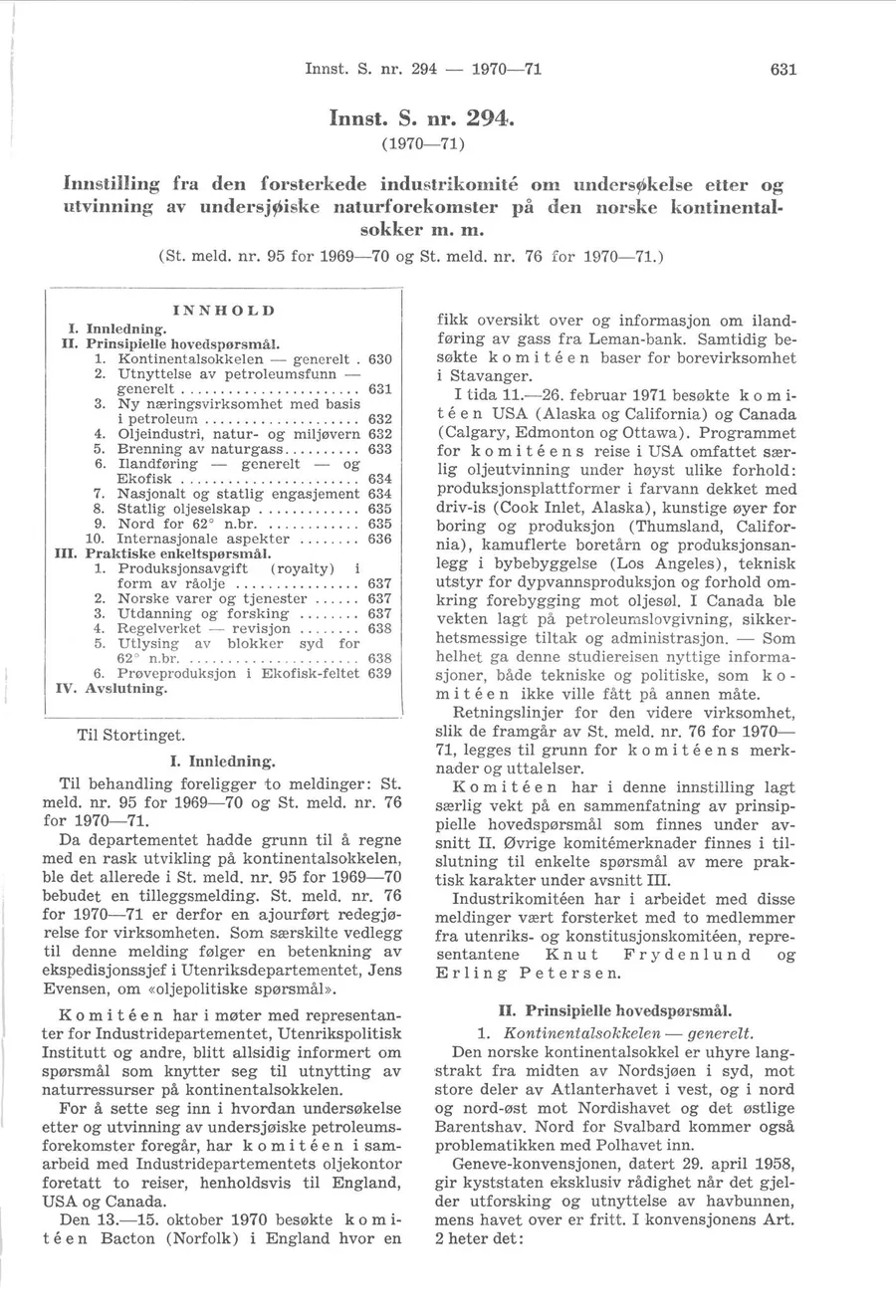 Innst. S. nr. 294 (1970–71), Stortingsforhandlinger vol. 115 nr. 6a, National Library of Norway The document itself — the committee recommendation of June 1971 whose principles for Norwegian petroleum, adopted unanimously by the Storting, became known as the Ten Oil Commandments. The Ten Oil Commandments — the Norwegian parliamentary
document of 1971 formulated by Rolf Hellem of the Labour
Party on the Storting's Standing Committee on Industry and
adopted unanimously by the chamber. Crystallised the
principles under which Norwegian petroleum would be
developed: Norwegian state sovereignty over the resources;
Norwegian-built technical and commercial capability rather
than dependence on foreign operators; integration with the
broader Norwegian economy without becoming dependent on
petroleum alone; environmental sustainability; the
establishment of a Norwegian state oil company. Short,
principled, and not specific about implementation — what it
provided was the constitutional framework within which the
next fifty years of Norwegian petroleum policy were
conducted.
, the Ten Oil Commandments. The Commandments, formulated by Rolf Hellem Norwegian Labour Party politician (1923–2021), Storting
representative from Nordland 1965–1981. A railway official
by profession. Author of the Standing Committee on Industry
document of 1971 known as De ti oljebud — the Ten Oil
Commandments — which formulated the principles under which
Norwegian petroleum would be developed: Norwegian state
sovereignty over the resources, Norwegian-built technical
and commercial capability rather than reliance on foreign
operators, integration with the broader Norwegian economy,
environmental sustainability, and the establishment of a
Norwegian state oil company. Adopted unanimously by the
Storting. The document was the constitutional framework
within which the next fifty years of Norwegian petroleum
policy were conducted.
of the Labour Party on the Storting
Innst. S. nr. 294 (1970–71), Stortingsforhandlinger vol. 115 nr. 6a, National Library of Norway The document itself — the committee recommendation of June 1971 whose principles for Norwegian petroleum, adopted unanimously by the Storting, became known as the Ten Oil Commandments. The Ten Oil Commandments — the Norwegian parliamentary
document of 1971 formulated by Rolf Hellem of the Labour
Party on the Storting's Standing Committee on Industry and
adopted unanimously by the chamber. Crystallised the
principles under which Norwegian petroleum would be
developed: Norwegian state sovereignty over the resources;
Norwegian-built technical and commercial capability rather
than dependence on foreign operators; integration with the
broader Norwegian economy without becoming dependent on
petroleum alone; environmental sustainability; the
establishment of a Norwegian state oil company. Short,
principled, and not specific about implementation — what it
provided was the constitutional framework within which the
next fifty years of Norwegian petroleum policy were
conducted.
, the Ten Oil Commandments. The Commandments, formulated by Rolf Hellem Norwegian Labour Party politician (1923–2021), Storting
representative from Nordland 1965–1981. A railway official
by profession. Author of the Standing Committee on Industry
document of 1971 known as De ti oljebud — the Ten Oil
Commandments — which formulated the principles under which
Norwegian petroleum would be developed: Norwegian state
sovereignty over the resources, Norwegian-built technical
and commercial capability rather than reliance on foreign
operators, integration with the broader Norwegian economy,
environmental sustainability, and the establishment of a
Norwegian state oil company. Adopted unanimously by the
Storting. The document was the constitutional framework
within which the next fifty years of Norwegian petroleum
policy were conducted.
of the Labour Party on the Storting 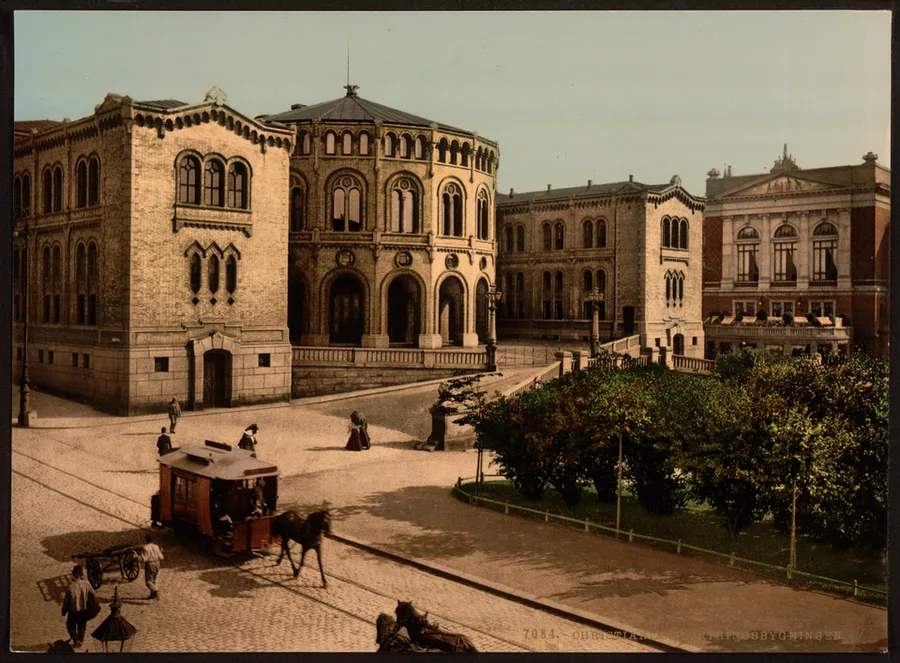 Detroit Publishing Company, Storthings Bygningen, Christiania, Norway (c. 1890-1900), Library of Congress / World Digital Library The Storting building in Kristiania (Oslo), Norway's parliament since the 1814 Constitution and the seat of the legislature that still governs the country. The Grand Assembly — the parliament of independent
Norway, established by the Eidsvoll Constitution of 17 May
1814 as the country's sovereign legislature. The name
Storting (Stór-Þing, the great assembly) deliberately
reaches back to the medieval Norwegian thing tradition,
asserting institutional continuity with the pre-Danish
Norwegian state. Under the 1814 constitution the Storting
divided into two chambers — Lagting and Odelsting —
for legislative purposes; the two-chamber arrangement was
abolished in 2009 and the Storting has been a single
chamber since. The current building, in central Oslo,
opened in 1866.
Also discussed in The 400-Year Night — when the Northern Lion lay dormantLutheran Norway and Pietism — a farmer named Hans Nielsen Hauge and a lay revival that could not be silencedThe Constitution That Saved a Nation — five radical weeks at Eidsvoll, 1814The Quiet Revolution — how Norway won its independence without a warWorld War II — the King’s “No” and the Nazis in NorwayAllemannsretten — the right to roamPolitikk — the left, the right, and the Norwegian way ’s Standing Committee on Industry and adopted unanimously by the chamber, set out the principles under which Norwegian petroleum would be developed: the Norwegian state would maintain ultimate sovereignty over Norwegian petroleum resources, the development would be conducted in a manner compatible with Norwegian industrial and employment policy, the Norwegian state would build its own technical and commercial capability rather than rely entirely on foreign operators, all activities would be governed under Norwegian law, the development would proceed at a pace compatible with sustainable management of the natural environment, the petroleum economy would be integrated with the broader Norwegian economy without becoming dependent on petroleum alone, and a Norwegian state oil company would be established to participate in operations. The document was short, principled, and not specific about implementation. What it provided was the constitutional framework within which the next fifty years of Norwegian petroleum policy were conducted.
Detroit Publishing Company, Storthings Bygningen, Christiania, Norway (c. 1890-1900), Library of Congress / World Digital Library The Storting building in Kristiania (Oslo), Norway's parliament since the 1814 Constitution and the seat of the legislature that still governs the country. The Grand Assembly — the parliament of independent
Norway, established by the Eidsvoll Constitution of 17 May
1814 as the country's sovereign legislature. The name
Storting (Stór-Þing, the great assembly) deliberately
reaches back to the medieval Norwegian thing tradition,
asserting institutional continuity with the pre-Danish
Norwegian state. Under the 1814 constitution the Storting
divided into two chambers — Lagting and Odelsting —
for legislative purposes; the two-chamber arrangement was
abolished in 2009 and the Storting has been a single
chamber since. The current building, in central Oslo,
opened in 1866.
Also discussed in The 400-Year Night — when the Northern Lion lay dormantLutheran Norway and Pietism — a farmer named Hans Nielsen Hauge and a lay revival that could not be silencedThe Constitution That Saved a Nation — five radical weeks at Eidsvoll, 1814The Quiet Revolution — how Norway won its independence without a warWorld War II — the King’s “No” and the Nazis in NorwayAllemannsretten — the right to roamPolitikk — the left, the right, and the Norwegian way ’s Standing Committee on Industry and adopted unanimously by the chamber, set out the principles under which Norwegian petroleum would be developed: the Norwegian state would maintain ultimate sovereignty over Norwegian petroleum resources, the development would be conducted in a manner compatible with Norwegian industrial and employment policy, the Norwegian state would build its own technical and commercial capability rather than rely entirely on foreign operators, all activities would be governed under Norwegian law, the development would proceed at a pace compatible with sustainable management of the natural environment, the petroleum economy would be integrated with the broader Norwegian economy without becoming dependent on petroleum alone, and a Norwegian state oil company would be established to participate in operations. The document was short, principled, and not specific about implementation. What it provided was the constitutional framework within which the next fifty years of Norwegian petroleum policy were conducted.
Farouk Al-Kasim
The man whose practical work translated the Ten Commandments into operational machinery was an Iraqi petroleum geologist named Farouk Al-Kasim  Ali Talib Alshammari, Farouk Al-Kasim (2013), CC BY 3.0, Wikimedia Commons A 2013 portrait of Farouk Al-Kasim, the geologist who co-authored the 1971 white paper proposing Statoil and the Petroleum Directorate and led the Directorate's resource management from 1973 to 1991. Iraqi-Norwegian petroleum geologist (b. 1934, Basra).
Trained at Imperial College London in the late 1950s;
worked for the Iraq Petroleum Company through the 1960s.
Moved to Norway in 1968 with his Norwegian wife to seek
care for their son with cerebral palsy; took a consulting
role at the Industry Ministry that year as the first
petroleum geologist the Norwegian government had hired.
Co-author of the 1971 white paper proposing Statoil and
the Norwegian Petroleum Directorate. Director of resource
management at the Petroleum Directorate 1973–1991. The
individual most responsible for translating the Ten Oil
Commandments into operational Norwegian petroleum
institutions. Lives in Stavanger.
. Born in Basra in 1934, trained at Imperial College London in the late 1950s, employed by the Iraq Petroleum Company through the 1960s, Al-Kasim moved to Norway in 1968 because his wife was Norwegian and because the family wanted access to Norwegian medical care for their young son, who had cerebral palsy. He took a consulting position with the Norwegian Industry Ministry that same year as the first petroleum geologist the Norwegian government had ever hired. In 1971 he co-authored the white paper that proposed the creation of Statoil / Equinor
Ali Talib Alshammari, Farouk Al-Kasim (2013), CC BY 3.0, Wikimedia Commons A 2013 portrait of Farouk Al-Kasim, the geologist who co-authored the 1971 white paper proposing Statoil and the Petroleum Directorate and led the Directorate's resource management from 1973 to 1991. Iraqi-Norwegian petroleum geologist (b. 1934, Basra).
Trained at Imperial College London in the late 1950s;
worked for the Iraq Petroleum Company through the 1960s.
Moved to Norway in 1968 with his Norwegian wife to seek
care for their son with cerebral palsy; took a consulting
role at the Industry Ministry that year as the first
petroleum geologist the Norwegian government had hired.
Co-author of the 1971 white paper proposing Statoil and
the Norwegian Petroleum Directorate. Director of resource
management at the Petroleum Directorate 1973–1991. The
individual most responsible for translating the Ten Oil
Commandments into operational Norwegian petroleum
institutions. Lives in Stavanger.
. Born in Basra in 1934, trained at Imperial College London in the late 1950s, employed by the Iraq Petroleum Company through the 1960s, Al-Kasim moved to Norway in 1968 because his wife was Norwegian and because the family wanted access to Norwegian medical care for their young son, who had cerebral palsy. He took a consulting position with the Norwegian Industry Ministry that same year as the first petroleum geologist the Norwegian government had ever hired. In 1971 he co-authored the white paper that proposed the creation of Statoil / Equinor 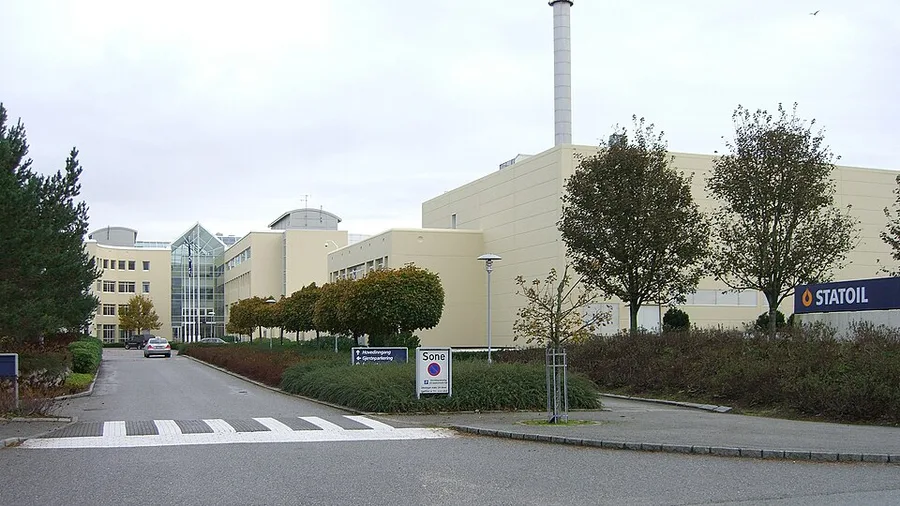 J. Ådnanes, Statoil office building, Lura, Sandnes (2006), CC BY-SA 2.5, Wikimedia Commons A Statoil office outside Stavanger, the blue sign carrying the identity — the company the Storting created on 14 June 1972 as the state's own vehicle for technical and commercial petroleum capability; partially listed in 2001, rebranded Equinor in 2018. Norwegian state oil company, established by the Storting on
14 June 1972 as Den norske stats oljeselskap A/S.
Proposed in Al-Kasim and the Norwegian government's 1971
white paper as the vehicle through which the Norwegian
state would build its own technical and commercial
petroleum capability rather than depend on foreign
operators (the second principle of the Ten Oil
Commandments). Wholly state-owned 1972–2001, when it
partially privatised and listed on the Oslo and New York
exchanges. Merged in 2007 with Norsk Hydro's oil and gas
operations to form StatoilHydro, simplified back to
Statoil in 2009. Rebranded as Equinor in 2018 to signal
the energy transition. The Norwegian state retains a
controlling stake of roughly two-thirds.
as a state-owned operating company and a Norwegian Petroleum Directorate
J. Ådnanes, Statoil office building, Lura, Sandnes (2006), CC BY-SA 2.5, Wikimedia Commons A Statoil office outside Stavanger, the blue sign carrying the identity — the company the Storting created on 14 June 1972 as the state's own vehicle for technical and commercial petroleum capability; partially listed in 2001, rebranded Equinor in 2018. Norwegian state oil company, established by the Storting on
14 June 1972 as Den norske stats oljeselskap A/S.
Proposed in Al-Kasim and the Norwegian government's 1971
white paper as the vehicle through which the Norwegian
state would build its own technical and commercial
petroleum capability rather than depend on foreign
operators (the second principle of the Ten Oil
Commandments). Wholly state-owned 1972–2001, when it
partially privatised and listed on the Oslo and New York
exchanges. Merged in 2007 with Norsk Hydro's oil and gas
operations to form StatoilHydro, simplified back to
Statoil in 2009. Rebranded as Equinor in 2018 to signal
the energy transition. The Norwegian state retains a
controlling stake of roughly two-thirds.
as a state-owned operating company and a Norwegian Petroleum Directorate 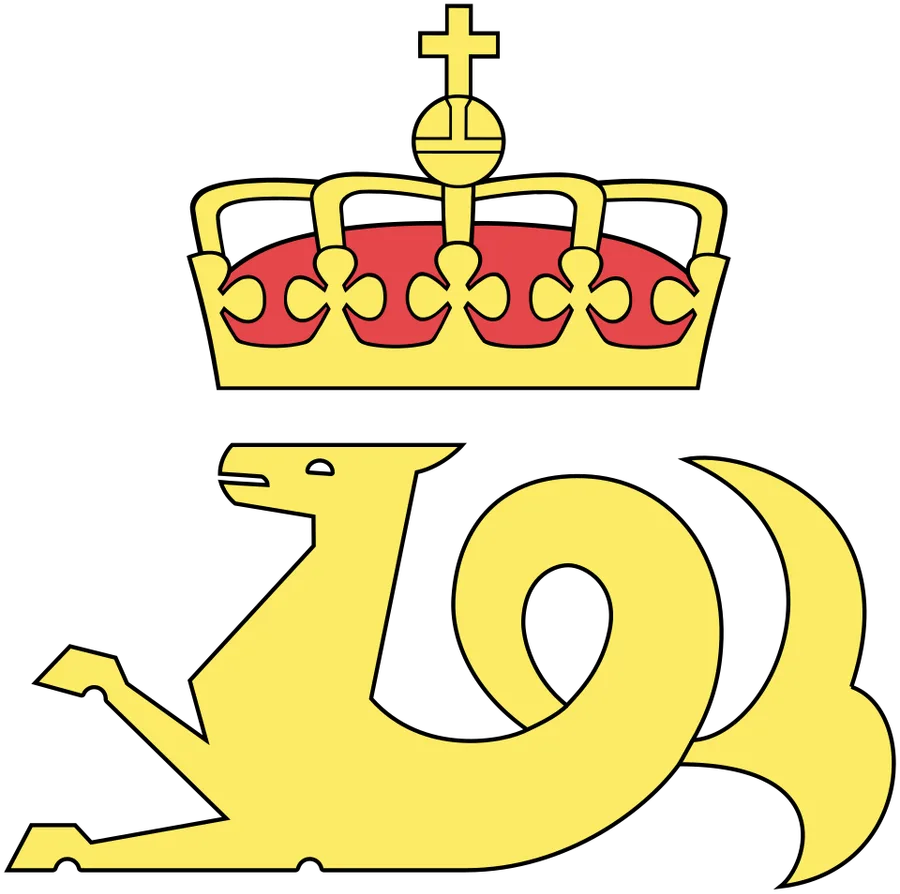 Oljedirektoratet, official emblem, public domain, Wikimedia Commons The Directorate's own emblem — a crowned sea-lion, the state's heraldic lion carried offshore — the mark of the regulatory authority the Storting established alongside Statoil on 14 June 1972. Oljedirektoratet — the Norwegian state's technical and
regulatory authority for petroleum activities on the
Norwegian continental shelf, established by the Storting
on 14 June 1972 (the same day as Statoil). Proposed
alongside Statoil in the 1971 white paper co-authored by
Farouk Al-Kasim, who served as its director of resource
management from 1973 to 1991. Headquartered in Stavanger.
Responsibilities include resource management, licensing
rounds, field development approvals, production
allocations, and reservoir engineering. Renamed
Sokkeldirektoratet (the Offshore Directorate) on 1
January 2024 to reflect the expansion of Norwegian
offshore activity beyond petroleum into carbon storage and
offshore renewable energy.
as the technical and regulatory authority; both institutions were established the following year. From 1973 to 1991 Al-Kasim served as the Petroleum Directorate’s director of resource management, designing the licensing rounds, advising on field-development decisions, and insisting — against the political pressures of the 1970s and 1980s to spend petroleum revenues immediately — that revenues be banked rather than consumed. The man who had grown up in Iraq watching what oil revenue did to a country that did not have institutions strong enough to manage it spent his Norwegian career building exactly the institutions that Iraq had not built. The institutions worked.
Oljedirektoratet, official emblem, public domain, Wikimedia Commons The Directorate's own emblem — a crowned sea-lion, the state's heraldic lion carried offshore — the mark of the regulatory authority the Storting established alongside Statoil on 14 June 1972. Oljedirektoratet — the Norwegian state's technical and
regulatory authority for petroleum activities on the
Norwegian continental shelf, established by the Storting
on 14 June 1972 (the same day as Statoil). Proposed
alongside Statoil in the 1971 white paper co-authored by
Farouk Al-Kasim, who served as its director of resource
management from 1973 to 1991. Headquartered in Stavanger.
Responsibilities include resource management, licensing
rounds, field development approvals, production
allocations, and reservoir engineering. Renamed
Sokkeldirektoratet (the Offshore Directorate) on 1
January 2024 to reflect the expansion of Norwegian
offshore activity beyond petroleum into carbon storage and
offshore renewable energy.
as the technical and regulatory authority; both institutions were established the following year. From 1973 to 1991 Al-Kasim served as the Petroleum Directorate’s director of resource management, designing the licensing rounds, advising on field-development decisions, and insisting — against the political pressures of the 1970s and 1980s to spend petroleum revenues immediately — that revenues be banked rather than consumed. The man who had grown up in Iraq watching what oil revenue did to a country that did not have institutions strong enough to manage it spent his Norwegian career building exactly the institutions that Iraq had not built. The institutions worked.
The Fund
The fiscal architecture that emerged was characteristic. Petroleum revenues went directly to the Norwegian state through corporate taxation on the operators at rates that ran as high as seventy-eight percent on production profits, and through the state’s direct ownership share in the fields held by Statoil and, from 1985, by the State Direct Financial Interest alongside the foreign operators. Statoil itself partially privatized in 2001, listed on the Oslo and New York exchanges, and rebranded as Equinor in 2018 to signal the energy transition; the Norwegian state retains a controlling stake of roughly two-thirds. The state petroleum revenues were not added to the Norwegian operating budget. Instead, they were sequestered into a separate state fund, the Government Pension Fund Global 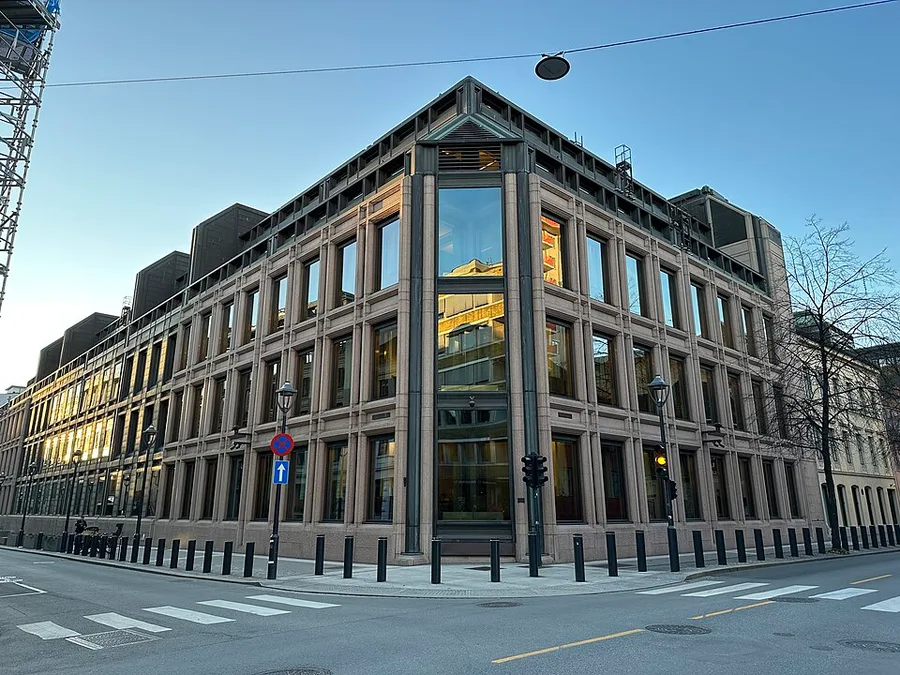 Ssu, Norges Bank, Bankplassen 2, Oslo (2024), CC BY-SA 4.0, Wikimedia Commons The Norges Bank headquarters on Bankplassen in Oslo — the building where Norges Bank Investment Management runs the fund's roughly two-trillion-dollar portfolio of global equity, fixed income, and real estate. Statens pensjonsfond utland — the Norwegian state
sovereign wealth fund into which petroleum revenues are
sequestered. Established by Storting act of 22 June 1990 as
Statens petroleumsfond (the State Petroleum Fund); first
capital injection in 1996; renamed in 2006. The mandate is
to invest the petroleum revenues abroad in diversified
global equity, fixed income, and real estate, with the
fiscal rule limiting annual draws to the fund's expected
long-term real return of about three per cent of its value.
By 2026 the fund holds more than two trillion dollars in
assets, owns approximately 1.5 per cent of the world's
listed-company equity, and is the largest sovereign wealth
fund in human history. Managed by Norges Bank Investment
Management (NBIM).
Also discussed in Politikk — the left, the right, and the Norwegian way , originally called the State Petroleum Fund, established in 1990. The fund’s mandate is to invest the petroleum revenues abroad in diversified global equity, fixed income, and real estate, with strict rules limiting the share of the fund’s returns that can be drawn down to finance Norwegian domestic spending. By 2026 the fund holds roughly two trillion dollars in assets, owning approximately one and a half percent of the world’s listed-company equity, and is the largest sovereign wealth fund in human history. The expected long-term real return on the fund is around three percent, the rule under which Norway draws roughly sixty billion dollars annually in available revenue while preserving the principal for future Norwegians who will continue to draw on it after the petroleum runs out.
Ssu, Norges Bank, Bankplassen 2, Oslo (2024), CC BY-SA 4.0, Wikimedia Commons The Norges Bank headquarters on Bankplassen in Oslo — the building where Norges Bank Investment Management runs the fund's roughly two-trillion-dollar portfolio of global equity, fixed income, and real estate. Statens pensjonsfond utland — the Norwegian state
sovereign wealth fund into which petroleum revenues are
sequestered. Established by Storting act of 22 June 1990 as
Statens petroleumsfond (the State Petroleum Fund); first
capital injection in 1996; renamed in 2006. The mandate is
to invest the petroleum revenues abroad in diversified
global equity, fixed income, and real estate, with the
fiscal rule limiting annual draws to the fund's expected
long-term real return of about three per cent of its value.
By 2026 the fund holds more than two trillion dollars in
assets, owns approximately 1.5 per cent of the world's
listed-company equity, and is the largest sovereign wealth
fund in human history. Managed by Norges Bank Investment
Management (NBIM).
Also discussed in Politikk — the left, the right, and the Norwegian way , originally called the State Petroleum Fund, established in 1990. The fund’s mandate is to invest the petroleum revenues abroad in diversified global equity, fixed income, and real estate, with strict rules limiting the share of the fund’s returns that can be drawn down to finance Norwegian domestic spending. By 2026 the fund holds roughly two trillion dollars in assets, owning approximately one and a half percent of the world’s listed-company equity, and is the largest sovereign wealth fund in human history. The expected long-term real return on the fund is around three percent, the rule under which Norway draws roughly sixty billion dollars annually in available revenue while preserving the principal for future Norwegians who will continue to draw on it after the petroleum runs out.
Alexander L. Kielland
The maturation of the system included a catastrophe. The Norwegian petroleum industry’s worst single accident comes on the twenty-seventh of March 1980, when the semi-submersible platform Alexander L. Kielland disaster 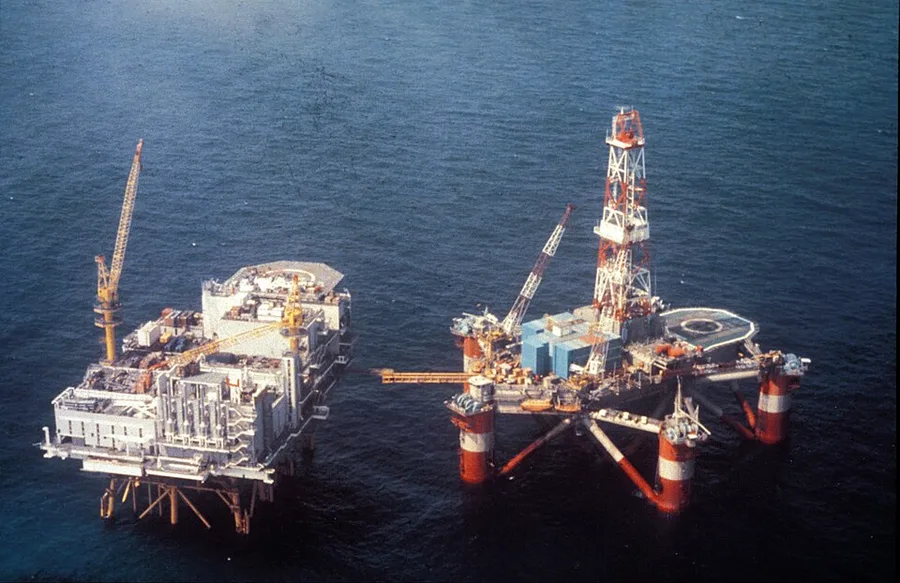 Norsk Oljemuseum / Jan A. Tjemsland, CC BY 3.0 Shows the flotel Alexander L. Kielland moored beside the Edda 2/7C platform before its 27 March 1980 capsize — the intact rig rather than the disaster itself, in keeping with the dignity the 123 dead are owed. Capsize on 27 March 1980 of the semi-submersible platform
Alexander L. Kielland in the Ekofisk field in heavy
weather. The failure began at a fatigue crack on a poorly
welded instrument connection in one bracing, propagated
through the other bracings on one of the platform's legs;
the leg broke loose, five of the six anchor cables sheared
in succession, and within twenty minutes the last cable
snapped. The platform — in use as a flotel for production
workers on the nearby Edda field — rolled over and floated
upside down. 123 of the 212 men aboard were killed. The
worst industrial accident in Norwegian history. Produced
the Petroleum Act of 1985 and the comprehensive Norwegian
offshore-safety regime. Commemorated at Brutt Lenke —
the Broken Chain — a clifftop monument near Stavanger.
capsizes in the Ekofisk field in heavy weather. The failure begins in a single bracing — a fatigue crack at a poorly welded instrument connection — that propagates through the other bracings on one of the platform’s legs; the leg itself then breaks loose, five of the six anchor cables shear in succession, and within twenty minutes the last cable snaps. The platform, in use as a flotel for the production workers on the nearby Edda field, rolls completely over and floats upside down, only the bottoms of its support columns above the waterline. One hundred and twenty-three of the two hundred and twelve men aboard are killed, mostly through drowning or hypothermia in the cold North Sea water. The hull remains inverted in the field until it is uprighted in salvage operations and scuttled in 1983. The Alexander Kielland disaster is the worst industrial accident in Norwegian history and produces a Norwegian regulatory and safety-engineering response that becomes one of the world’s strictest offshore-petroleum safety regimes. The Petroleumsloven
Norsk Oljemuseum / Jan A. Tjemsland, CC BY 3.0 Shows the flotel Alexander L. Kielland moored beside the Edda 2/7C platform before its 27 March 1980 capsize — the intact rig rather than the disaster itself, in keeping with the dignity the 123 dead are owed. Capsize on 27 March 1980 of the semi-submersible platform
Alexander L. Kielland in the Ekofisk field in heavy
weather. The failure began at a fatigue crack on a poorly
welded instrument connection in one bracing, propagated
through the other bracings on one of the platform's legs;
the leg broke loose, five of the six anchor cables sheared
in succession, and within twenty minutes the last cable
snapped. The platform — in use as a flotel for production
workers on the nearby Edda field — rolled over and floated
upside down. 123 of the 212 men aboard were killed. The
worst industrial accident in Norwegian history. Produced
the Petroleum Act of 1985 and the comprehensive Norwegian
offshore-safety regime. Commemorated at Brutt Lenke —
the Broken Chain — a clifftop monument near Stavanger.
capsizes in the Ekofisk field in heavy weather. The failure begins in a single bracing — a fatigue crack at a poorly welded instrument connection — that propagates through the other bracings on one of the platform’s legs; the leg itself then breaks loose, five of the six anchor cables shear in succession, and within twenty minutes the last cable snaps. The platform, in use as a flotel for the production workers on the nearby Edda field, rolls completely over and floats upside down, only the bottoms of its support columns above the waterline. One hundred and twenty-three of the two hundred and twelve men aboard are killed, mostly through drowning or hypothermia in the cold North Sea water. The hull remains inverted in the field until it is uprighted in salvage operations and scuttled in 1983. The Alexander Kielland disaster is the worst industrial accident in Norwegian history and produces a Norwegian regulatory and safety-engineering response that becomes one of the world’s strictest offshore-petroleum safety regimes. The Petroleumsloven 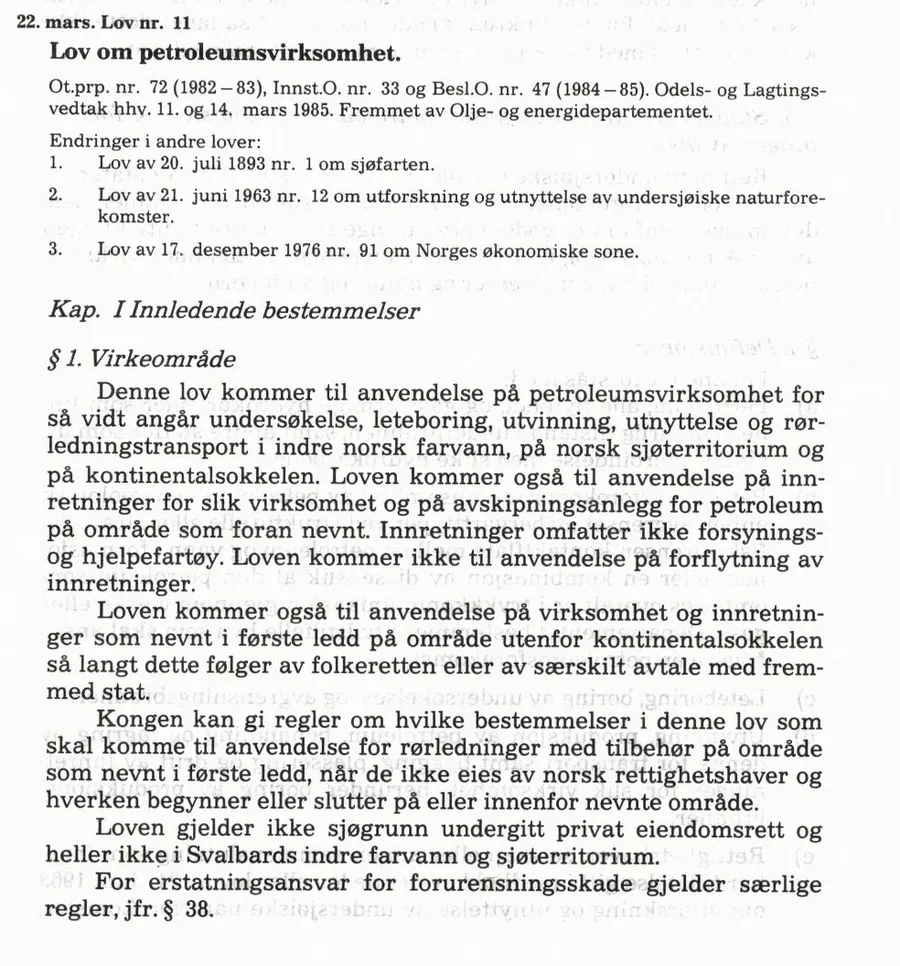 Lov om petroleumsvirksomhet, Norsk Lovtidend Avd. I 1985 Nr. 6, National Library of Norway The act's first page as promulgated in Norsk Lovtidend — the comprehensive petroleum statute of 22 March 1985 that gathered licensing, field development, safety, and decommissioning under one law in the years after the Alexander L. Kielland disaster. The Petroleum Act — the comprehensive Norwegian statute
governing petroleum activities on the Norwegian
continental shelf. First passed in 1985 in response to the
Alexander L. Kielland disaster of 27 March 1980;
comprehensively revised in 1996 (Act of 29 November 1996,
No. 72). Consolidates licensing, field development,
operational safety, environmental protection, taxation,
and decommissioning under a single statutory regime.
Norwegian offshore operational discipline under the Act
runs at standards substantially higher than corresponding
regulations in the British, American, or Middle Eastern
offshore sectors. The safety regulator was spun off from
the Petroleum Directorate in 2004 and renamed Havtil in
January 2024.
— passes in 1985 and is revised in 1996, placing the offshore industry under a comprehensive statutory framework; the safety regulator is spun off from the Norwegian Petroleum Directorate in 2004 as the Petroleum Safety Authority and renamed the Norwegian Ocean Industry Authority (Havtil) in January 2024. Norwegian worker protection, structural inspection, and operational discipline now run at standards substantially higher than the corresponding regulations in the British, American, or Middle Eastern offshore sectors. The disaster is commemorated at Brutt Lenke — the Broken Chain — a clifftop monument near Stavanger where the names of the one hundred and twenty-three dead are cast on copper panels beneath two enormous chain links, and by an annual ceremony each March.
Lov om petroleumsvirksomhet, Norsk Lovtidend Avd. I 1985 Nr. 6, National Library of Norway The act's first page as promulgated in Norsk Lovtidend — the comprehensive petroleum statute of 22 March 1985 that gathered licensing, field development, safety, and decommissioning under one law in the years after the Alexander L. Kielland disaster. The Petroleum Act — the comprehensive Norwegian statute
governing petroleum activities on the Norwegian
continental shelf. First passed in 1985 in response to the
Alexander L. Kielland disaster of 27 March 1980;
comprehensively revised in 1996 (Act of 29 November 1996,
No. 72). Consolidates licensing, field development,
operational safety, environmental protection, taxation,
and decommissioning under a single statutory regime.
Norwegian offshore operational discipline under the Act
runs at standards substantially higher than corresponding
regulations in the British, American, or Middle Eastern
offshore sectors. The safety regulator was spun off from
the Petroleum Directorate in 2004 and renamed Havtil in
January 2024.
— passes in 1985 and is revised in 1996, placing the offshore industry under a comprehensive statutory framework; the safety regulator is spun off from the Norwegian Petroleum Directorate in 2004 as the Petroleum Safety Authority and renamed the Norwegian Ocean Industry Authority (Havtil) in January 2024. Norwegian worker protection, structural inspection, and operational discipline now run at standards substantially higher than the corresponding regulations in the British, American, or Middle Eastern offshore sectors. The disaster is commemorated at Brutt Lenke — the Broken Chain — a clifftop monument near Stavanger where the names of the one hundred and twenty-three dead are cast on copper panels beneath two enormous chain links, and by an annual ceremony each March.
The welfare state
The Norwegian welfare state that the petroleum revenues finance is the second arm of the same story. The 1970s Norwegian welfare state was already a comprehensive social-democratic arrangement, with universal healthcare, free university education, generous unemployment and disability insurance, paid parental leave, public pensions, and a tax structure that produced one of the most equal income distributions in the world. The petroleum revenues did not create this system. They strengthened it and made it sustainable. The Norwegian state in 2026 spends approximately fifty percent of GDP on government programs. The Pension Fund’s annual draws, capped by rule at the fund’s expected long-term real return of three percent of its value, finance roughly a quarter of the national budget. The country’s gross domestic product per capita runs around ninety thousand dollars in nominal terms, among the highest in Europe, and Norway’s economic position relative to its Scandinavian neighbors is the strongest among them. The petroleum revenues have funded the social-democratic system that pre-existed them and have made the system work better than it would have otherwise.
The contradiction
The cultural dimension is more complicated. Norwegians have lived for the last half-century with the awareness that the country’s wealth comes from a non-renewable resource whose extraction is structurally incompatible with the climate commitments that most Norwegians also support. The country is one of the world’s most enthusiastic adopters of electric vehicles, of renewable hydroelectric and wind power for domestic electricity, of carbon-pricing schemes, and of the international climate agreements. The country is also one of the world’s largest exporters of fossil fuels per capita. The contradiction has been managed politically by treating Norwegian petroleum as energy for the broader European economy rather than as domestic Norwegian consumption, by funding domestic green-energy research and infrastructure from petroleum revenues, and by treating the eventual sunset of the petroleum economy as a planned-for transition rather than a crisis. The framing was tested in 2022, when the Russian invasion of Ukraine cut Europe’s eastward pipelines and Norway became, overnight, the European Union’s single largest supplier of natural gas. Norwegian export earnings on hydrocarbons that year were higher than at any previous point in the country’s history. Other European governments quietly objected; Norwegian commentators argued openly about whether the windfall amounted to war profiteering. The Norwegian government’s answer was that wartime supply at market prices was the European-energy framing working exactly as advertised — when Europe needed reliable non-Russian gas, Norway delivered, and the rent the country captured was the country’s by the long-established logic of its petroleum economy. The argument did not resolve the moral question. The Norwegian Pension Fund’s holdings are increasingly invested in renewable energy, in green technology companies, and in long-term sustainable infrastructure, on the explicit theory that the post-petroleum economy will need to be built and the country might as well start funding it now.
What the management does not resolve is the climate critique itself. Norway exports its emissions while keeping its domestic ledger clean on hydropower, banks the windfall, and continues to open new exploration acreage in the Barents Sea; the government floated and then paused deep-sea mining licensing in 2024. Norwegian environmentalists and international climate scholars argue that this amounts to climate free-riding — the country claims the moral standing of clean energy at home while supplying the carbon-intensive energy that warms the planet elsewhere. The argument is unresolved inside Norway and inside the global climate debate. Whether the country’s political calmness around the contradiction reflects wisdom or denial is the question the climate movement keeps asking, and Norway’s official answer has not silenced it.
What did not happen
The most surprising thing about the fifty years of the Norwegian oil age, in retrospect, is what did not happen in its acute form. Norway did not develop the full Dutch disease Economic syndrome named for the Netherlands after its 1959 Groningen gas discovery: a resource boom destroys the rest of a country's tradable-goods economy by raising the currency exchange rate, enlarging the natural-resource sector and the non-tradable services sector at the expense of manufacturing, and hollowing out the country's industrial base. The textbook reason small-state resource windfalls often produce worse long-term outcomes than no windfall would. Norway has avoided the acute form through the discipline of the Government Pension Fund Global — sequestering revenues abroad rather than spending them domestically — though it carries a mild case in high cost levels, a thinned non-oil tradable sector, and supplier industries that remain oil-dependent. , the textbook syndrome in which a resource boom destroys the rest of the country’s tradable economy by raising the currency — though it caught a mild case: the country runs at among the highest cost levels in the world, its non-oil tradable sector has thinned, its supplier industries are dangerously oil-dependent, its public sector is large, and a real productivity question hangs over the post-oil economy. Nor did it catch the resource curse, the syndrome in which oil wealth produces corruption, inequality, and the collapse of political institutions. And it did not develop the cultural insularity of the wealthy small country that excludes outsiders, the political instability of the resource-dependent state, or the demographic depression of the country with too much subsidy. Norwegian voter turnout, income equality, and institutional integrity all remain high, and its cultural production stays active and outward-looking. The country has run its oil age the way the Ten Oil Commandments said it should be run.
Stavanger
The country that operates this story lives most of it in Stavanger. The modest west-coast town of sardine canneries and fishing-port workers became the operational capital of the Norwegian oil economy within a decade of Ekofisk. American oilfield engineers and roughnecks arrived in the thousands in the early 1970s, bringing Oklahoma and Texas accents into the supermarkets and pickup trucks onto the narrow waterfront streets. The Norwegian Petroleum Directorate, the safety regulator that became Havtil, and Statoil — later Equinor — are all headquartered in Stavanger or its immediate region. The Norsk Oljemuseum 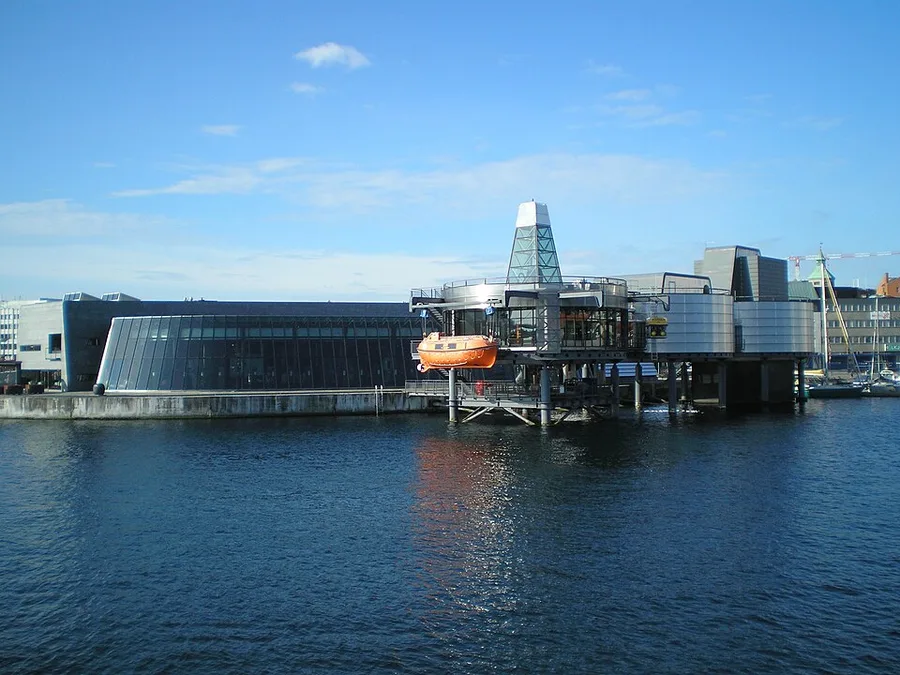 Carlos Delgado, Norsk Oljemuseum, Stavanger, CC BY-SA 3.0, Wikimedia Commons The museum's Kjeringholmen building, designed to evoke an offshore platform, is the institution this card describes — the public account of how Norway became a carefully managed petroleum economy. The Norwegian Petroleum Museum — national museum on the
Stavanger waterfront covering the discovery, development,
technology, and political economy of Norwegian offshore
petroleum. Founded by Storting decision 1985; opened in
its current building on the Kjeringholmen quay in 1999.
Designed by Lunde & Løvseth Arkitekter to evoke an
offshore platform. Exhibits include full-scale recovered
platform components, the Ekofisk discovery story, the
Alexander L. Kielland disaster commemoration, the Ten Oil
Commandments, and a continually updated treatment of the
Government Pension Fund Global. The principal public
account of how Norway became one of the world's most
carefully managed petroleum economies.
on the waterfront tells the story for visitors today: the rigs, the seismic surveys, the white paper, the Fund. Stavanger now has around a hundred and forty thousand people and a small-city competence in petroleum geology and field engineering that ranks among the best in the world.
Carlos Delgado, Norsk Oljemuseum, Stavanger, CC BY-SA 3.0, Wikimedia Commons The museum's Kjeringholmen building, designed to evoke an offshore platform, is the institution this card describes — the public account of how Norway became a carefully managed petroleum economy. The Norwegian Petroleum Museum — national museum on the
Stavanger waterfront covering the discovery, development,
technology, and political economy of Norwegian offshore
petroleum. Founded by Storting decision 1985; opened in
its current building on the Kjeringholmen quay in 1999.
Designed by Lunde & Løvseth Arkitekter to evoke an
offshore platform. Exhibits include full-scale recovered
platform components, the Ekofisk discovery story, the
Alexander L. Kielland disaster commemoration, the Ten Oil
Commandments, and a continually updated treatment of the
Government Pension Fund Global. The principal public
account of how Norway became one of the world's most
carefully managed petroleum economies.
on the waterfront tells the story for visitors today: the rigs, the seismic surveys, the white paper, the Fund. Stavanger now has around a hundred and forty thousand people and a small-city competence in petroleum geology and field engineering that ranks among the best in the world.
Farouk Al-Kasim has lived in Norway for fifty-eight years, most of them in Stavanger. He lives in retirement there as of 2026, past ninety. Al-Kasim has been the subject of multiple books, documentaries, and academic articles. The Norwegian government has decorated him several times. He has returned to Iraq only occasionally since 1968, sometimes in advisory capacity on the country’s petroleum policy. The country he helped build is a country he could not have built in Iraq. Iraq’s twentieth-century petroleum economy was shaped by the foreign-consortium control of the Iraq Petroleum Company, by sanctions, by the wars, and by the foreign interventions that Norway was largely spared; Al-Kasim’s Norwegian institutions worked because they were designed for a country that already had functioning institutions and was operating in a stable international position, and they were grafted onto those institutions in a way that strengthened both.
Fifty-six years on
The Norwegian authorities confirmed the Ekofisk find as commercial on Christmas Eve 1969. The wealth that confirmation announced has continued for fifty-six years. The combined Norwegian oil-and-gas production is now at or near its peak. What happens to the country when the wealth begins to taper, and whether the Pension Fund’s two trillion dollars in diversified global assets carries Norway through the transition the way the country has prepared for it to, is the open question of the next half-century.
Sources & further reading
Participant accounts
- Farouk Al-Kasim, Managing Petroleum Resources: The ‘Norwegian Model’ in a Broader Perspective (Oxford Institute for Energy Studies, 2006). By the Iraqi geologist who drafted much of the Norwegian regulatory framework between 1968 and 1991.
- Stig Kvendseth, Giant Discovery: A History of Ekofisk Through the First 20 Years (Phillips Petroleum Company Norway, 1988). The industry-side history of the find.
Modern scholarship
- Helge Ryggvik, The Norwegian Oil Experience: A Toolbox for Managing Resources? (Centre for Technology, Innovation and Culture, University of Oslo, 2010).
- Francis Sejersted, The Age of Social Democracy: Norway and Sweden in the Twentieth Century (Princeton University Press, 2011). The standard history of the Nordic welfare model the oil revenues fund.
- Halvor Mehlum, Karl Moene, and Ragnar Torvik, “Institutions and the Resource Curse,” Economic Journal 116 (2006). Why resource wealth wrecked other countries and not this one.
- Erling Røed Larsen, “Escaping the Resource Curse and the Dutch Disease? When and Why Norway Caught Up with and Forged Ahead of Its Neighbors,” American Journal of Economics and Sociology 65, no. 3 (2006).
Primary government documents
- Innst. S. nr. 294 (1970–71) — the Industry Committee recommendation containing De ti oljebud, the Ten Oil Commandments.
- Lov om Statens petroleumsfond (1990) — the act that created the Fund.
Reference
- Store norske leksikon (snl.no), entries “Ekofisk,” “De ti oljebud,” “Statens pensjonsfond utland,” “oljevirksomhet i Norge.”
- Norges Bank Investment Management (nbim.no) — the Fund’s own reporting.
- Norsk Petroleum (norskpetroleum.no), “Norway’s petroleum history.”
Visit
- Norsk Oljemuseum (the Norwegian Petroleum Museum), Stavanger — the rigs, the seismic surveys, the white paper, the Fund. https://www.norskolje.museum.no